


 Publication
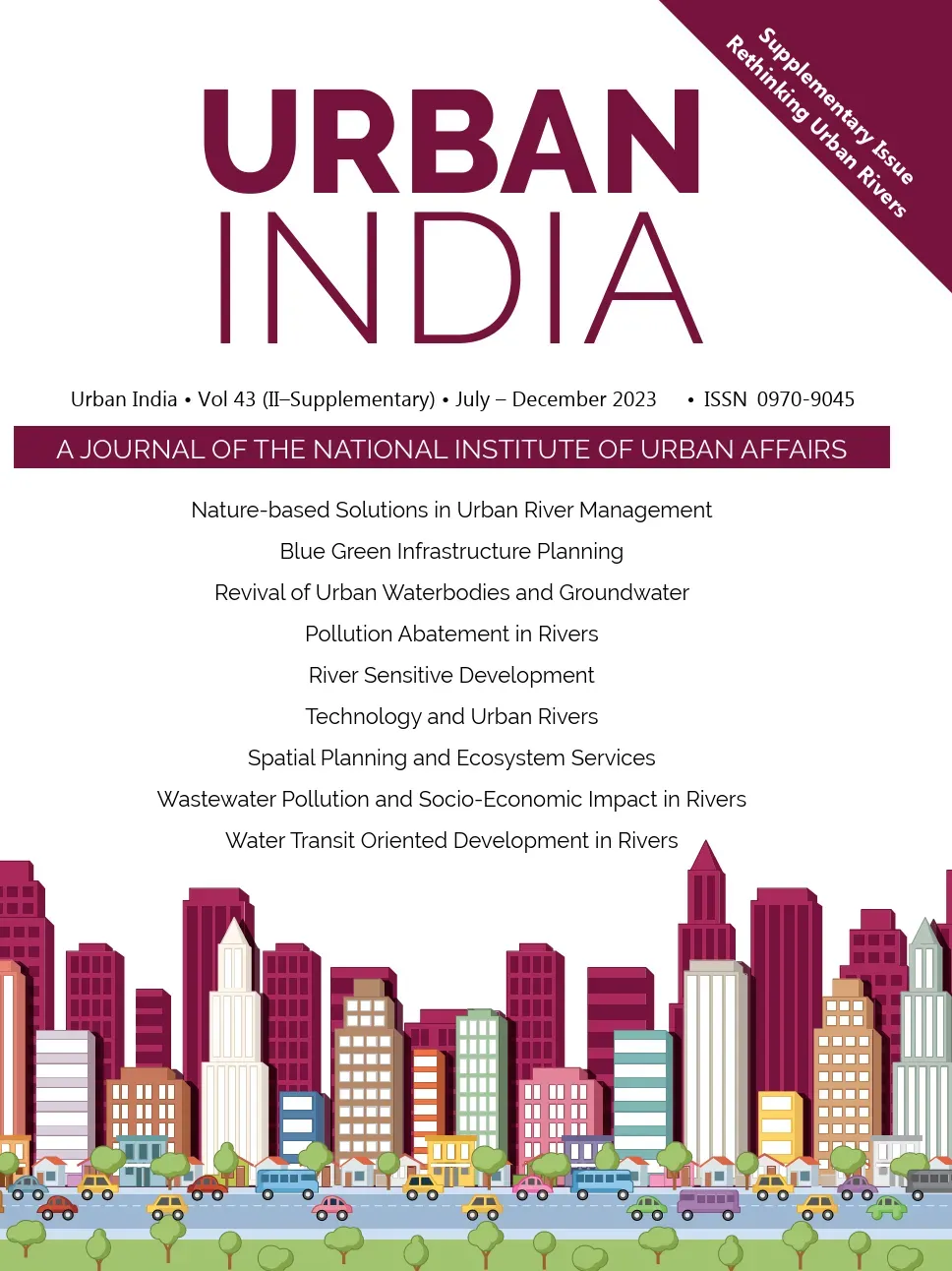
Urban India: Supplementary Edition (Re-thinking Urban Rivers)
 2023
2023
Volume 43 of Urban India, the National Institute of Urban Affairs’ (NIUA) bi-annual journal, contains nine pioneering research articles written by the student finalists of the Student Thesis Competition (STC), Season 2, along with various sector experts. STC is conducted annually by NIUA in collaboration with the National Mission for Clean Ganga (NMCG) to provide a platform for students to pitch their innovative research proposals, and gain financial and academic support. In 2022, students across India developed their projects across various thematics such as blue green infrastructure planning, the revival of urban waterbodies and groundwater, pollution abatement in rivers, wastewater pollut…

 Publication
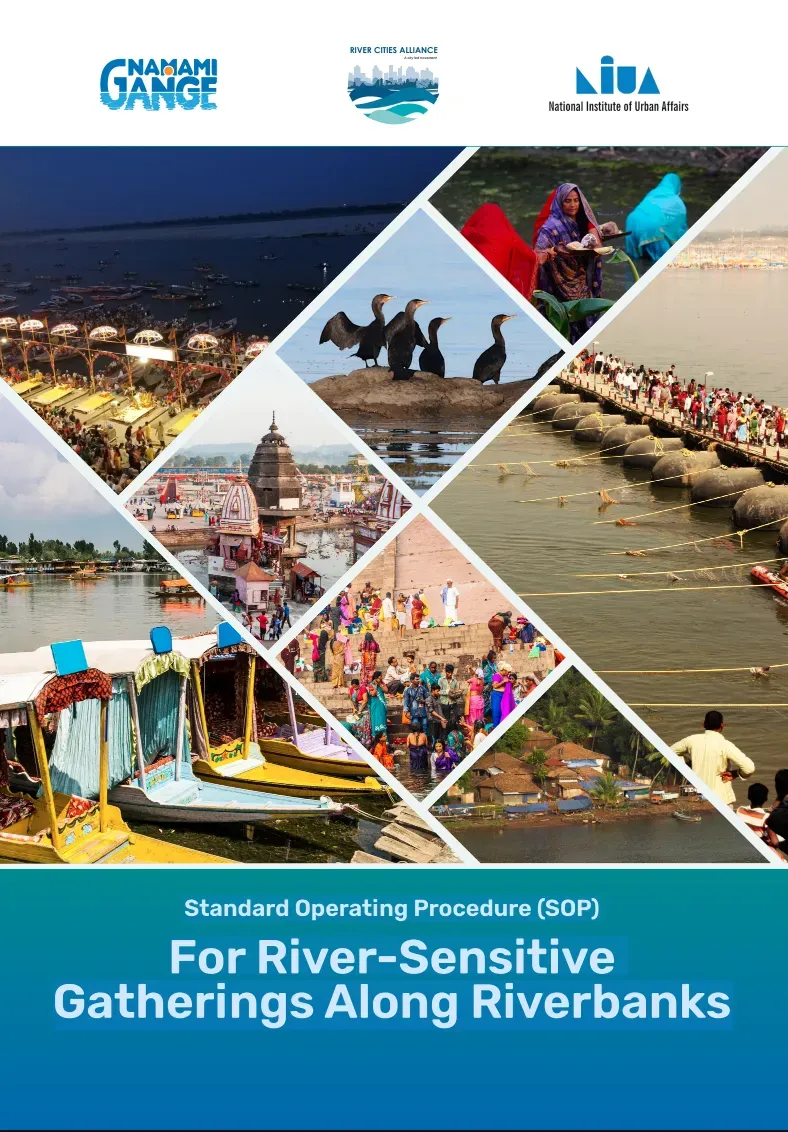
Standard Operating Procedure (SOP) For River-Sensitive Gatherings Along Riverbanks
2024
Riverbanks across India serve as dynamic public spaces, hosting a diverse range of gatherings — from spiritual festivals and cultural celebrations to concerts, civic ceremonies, environmental campaigns, and tourist activities. While these events foster community engagement and cultural expression, the concentration of significant numbers of people along the river's edge places considerable pressure on both natural and administrative resources, often exceeding their carrying capacity and posing risks to the ecological integrity of riverine environments.
 Report
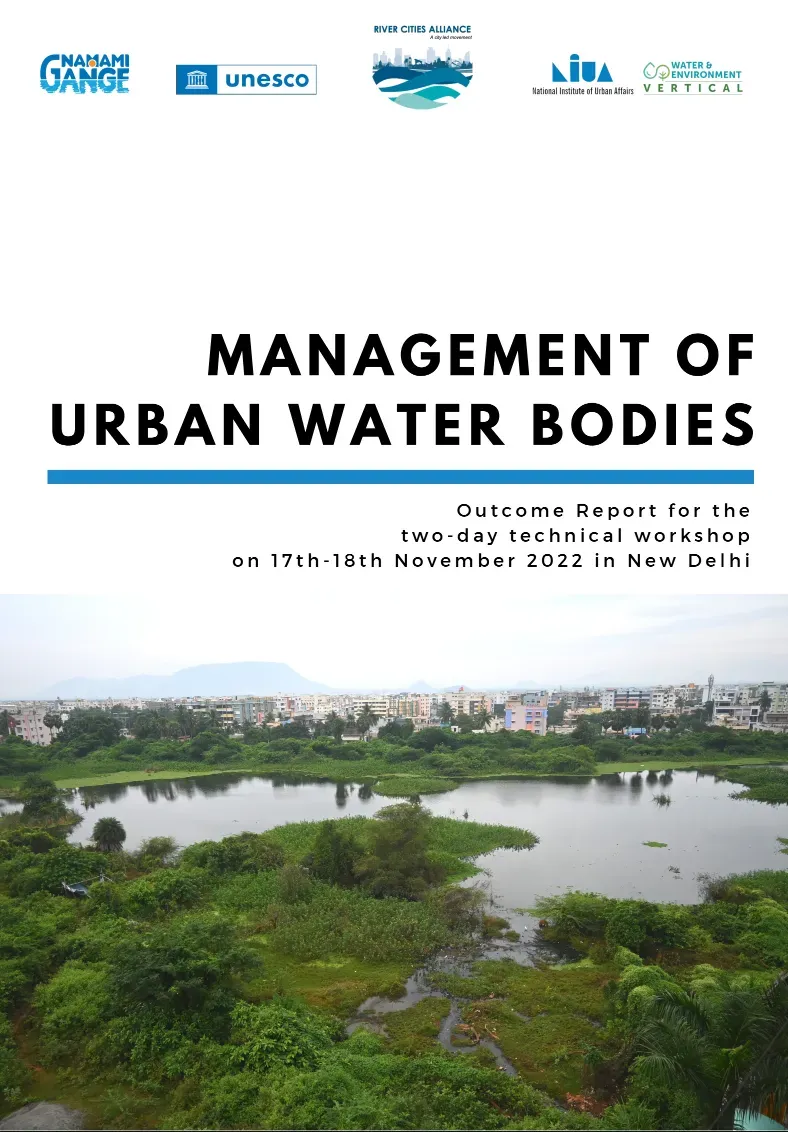
Outcome Report: Management of Urban Water Bodies
2022
Urban water bodies are critical components of city ecosystems, yet their effective assessment and management remain a persistent challenge across South and Southeast Asia. To address this, a two-day technical workshop on the Management of Urban Water Bodies was organised on 17–18 November 2022 in New Delhi, with the primary objective of building understanding and enabling practical application of the Urban Water Body Diagnostic Tool.The workshop brought together participants from River Cities Alliance member cities and member nations of the UNESCO New Delhi office — spanning Bangladesh, Bhutan, India, Maldives, Nepal, and Sri Lanka — providing a valuable platform for cross-national dialogue and collaborative learning. The workshop pursued three core objectives: fostering in-depth deliberation on the effective assessment and holistic management of urban water bodies; building participants' capacity in the knowledge and application of the Urban Water Body Diagnostic Tool; and exploring the potential for integrating nature-based solutions into urban water body management strategies.Over the course of two days, participants were equipped with a scientific and technical methodology for evaluating the status of water bodies within their respective cities — an essential foundation for evidence-based planning and informed decision-making. This Outcome Report documents the proceedings, …
 Publication
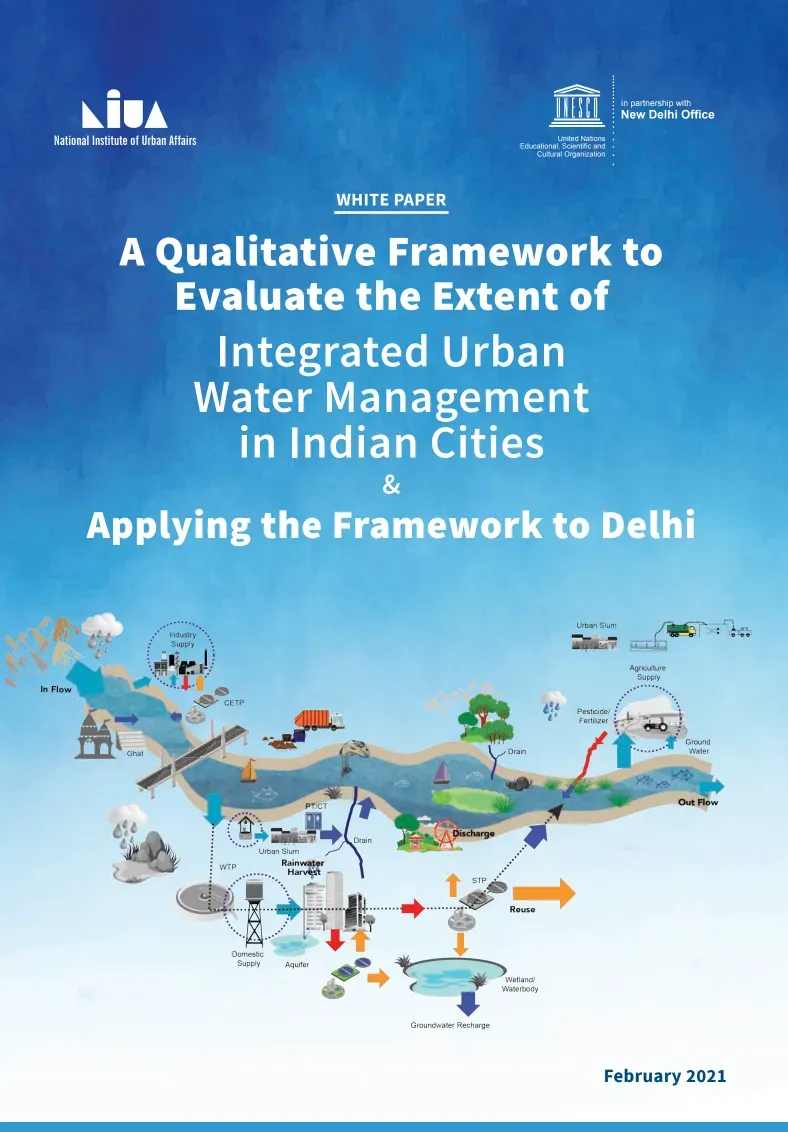
White Paper: A Qualitative Framework to Evaluate the Extent of Integrated Urban Water Management in Indian Cities & Applying the Framework to Delhi
2021
Integrated Urban Water Management (IUWM) has emerged as a widely recognised philosophy for managing the urban water sector, advocating a holistic treatment of water supply, wastewater, and stormwater systems to strengthen urban water security. While India has acknowledged IUWM as a sound and robust approach since 2015, its adoption has remained limited — constrained by gaps in awareness, the complexity of translating philosophy into practice, and the need for a nuanced understanding of a city's water dynamics across hydrological, economic, institutional, governance, and social dimensions.
 Report
Use of ICT for Water Supply and Sewerage Services in Smart Cities, SAAR–Sameeksha Series – Impact Assessment
2025
This research report presents a comprehensive assessment of the role of Information and Communications Technology (ICT) in enhancing water supply and sewerage services across India's 100 Smart Cities under the Smart Cities Mission (SCM). By integrating ICT and Internet of Things (IoT) devices into urban water and sewerage infrastructure, the SCM sought to optimise the performance and operational efficiency of cities spanning the full spectrum of urban scale — from small towns to megapolises. Of the 100 Smart Cities, 94 responded to the national-level assessment questionnaire developed for this study, providing a robust empirical foundation for analysis. The report documents the range and …
 Report
Managing Shallow Aquifers in Urban Areas: Pune Workshop Report 2024
2024
In 2022, the Atal Mission for Rejuvenation and Urban Transformation (AMRUT) 2.0 initiated a pilot project on Shallow Aquifer Management (SAM) across ten select cities — Jaipur, Dhanbad, Gwalior, Chennai, Hyderabad, Kolkata, Rajkot, Pune, Thane, and Bengaluru. The pilot aims to sensitise city officials to the potential of recharge wells and structures as practical interventions for shallow aquifer recharge, while simultaneously addressing the compounding urban challenges of groundwater depletion, urban flooding, and contamination of shallow groundwater reserves. Central to the initiative is the revitalisation of traditional water management structures, including dug wells and urban water bodies, and the mainstreaming of shallow aquifer management into city-level water strategies — in alignment with AMRUT's broader vision of sustained urban water security.This Report documents the proceedings and outcomes of a national training workshop convened as part of the pilot, bringing together a diverse cross-section of urban water management stakeholders for cross-learning and knowledge exchange. Organised as a collaborative effort by the National Institute of Urban Affairs (NIUA), ACWADAM (Pune), and BIOME Environment Solutions (Bangalore), the workshop drew participation from more than 49 representatives across 19 AMRUT cities from 13 states. Attendees included senior decision-makers s…
 Manual
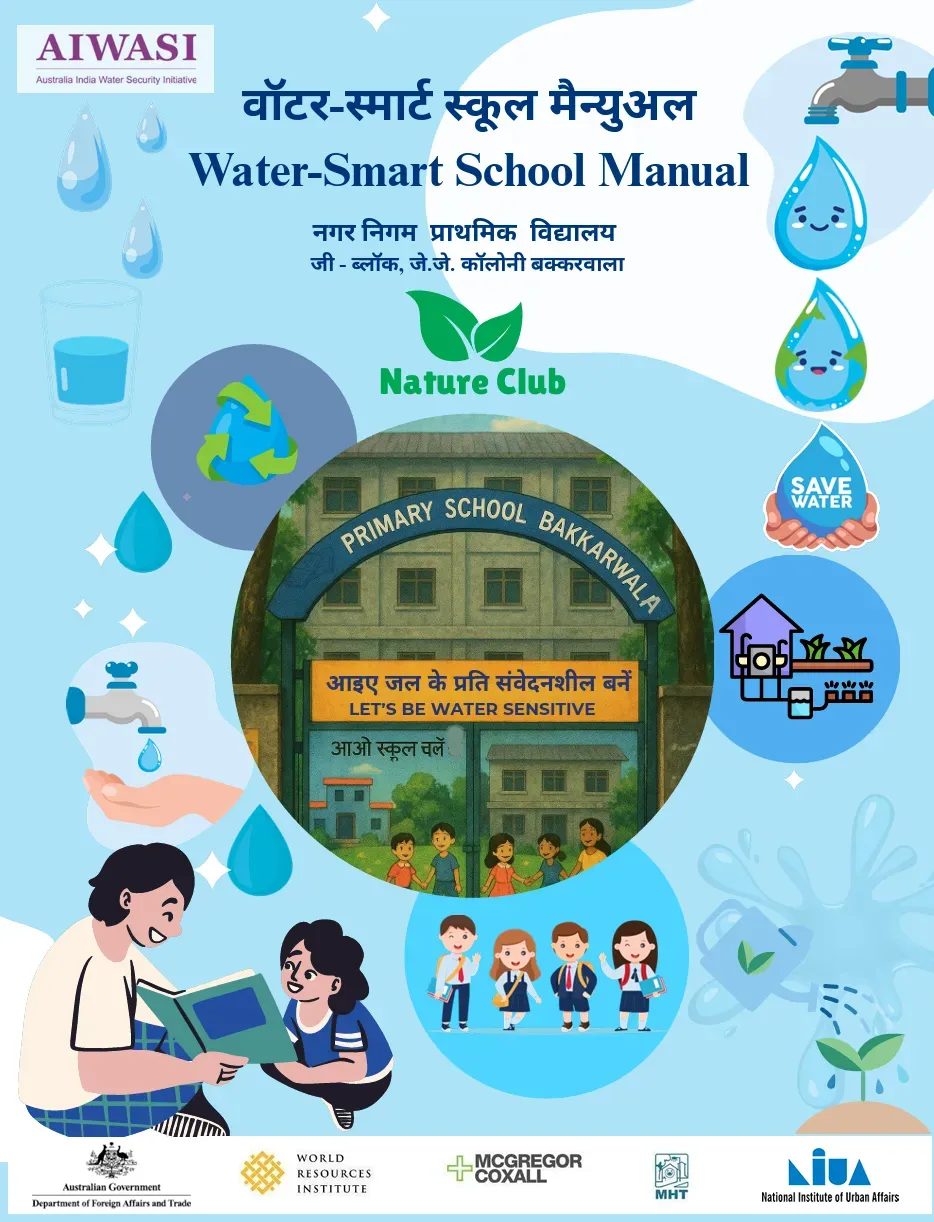
Water-Smart School Manual
2025
This manual is designed to help primary school students at G-Block, JJ Colony Bakkarwala learn about water security, groundwater recharge, and the benefits of the Rainwater Harvesting and Micro-irrigation systems installed on their campus under the AIWASI project. The goal is to raise awareness and encourage responsible water use among students.
 Manual
Community-led Tree Census: A Guidebook for Local Action
2025
This guidebook emerges from a shared need for environmental assessment, voiced at both the city and community levels through structured discussions within the Delhi Water Forum and Community Water Forums (CWFs) in two AIWASI demonstration sites: Bakkarwala Resettlement Colony and Mubarakpur Dabas Urban Village. In both communities, residents identified a significant lack of green cover and trees in their neighbourhoods, reinforcing the urgency for localised action. In Bakkarwala, while neighbourhood and pocket parks exist, the internal streets and open spaces remain largely devoid of tree cover, exacerbating residents’ exposure to urban heat island effects and severe air pollution. This obse…
 Publication
Delhi Water Inventory
2025
The Delhi Water Inventory has been developed to serve as a centralized compendium of water-related information for the National Capital Territory of Delhi. Its main objective is to compile fragmented datasets scattered across different institutions and present them in a structured, accessible manner. By bringing this information together, the inventory aims to support evidencebased planning, policy-making, and research on water resources in Delhi. The purpose of this document is to serve as a one-stop reference for data on Delhi’s water resources. It covers information on surface water, groundwater, and water quality, along with data on sewerage infrastructure, governance frameworks, and catchment characteristics. The compendium is designed for a diverse group of users, including city officials, planners, regulators, researchers, students, decision-makers, and civil society organizations. For government agencies, it provides a ready reference to track progress and ensure compliance with environmental mandates. For researchers and students, it offers a consolidated data source for academic studies and innovation. For the public, it fosters awareness and engagement with Delhi’s water challenges.
 Report
Towards a Water Sensitive Delhi: Strategic Recommendations for the Delhi Development Authority (DDA)
2025
This Position Paper is an outcome of the Australia-India Water Security Initiative (AIWASI), led by the Department of Foreign Affairs and Trade (DFAT), Australia, and implemented through a consortium comprising the World Resources Institute (WRI), the National Institute of Urban Affairs (NIUA), the Mahila Housing Trust (MHT), and McGregor Coxall (Australia). The Initiative seeks to advance the adoption of water-sensitive planning and design principles within the Indian urban context. Informed by the Delhi Water Sensitivity Baseline Assessment — which evaluated Delhi's performance against the seven goals of the Water Sensitive Cities Index, as conceived by the Cooperative Research Centre for …
 Report
Delhi's Water Sensitivity Baseline
2025
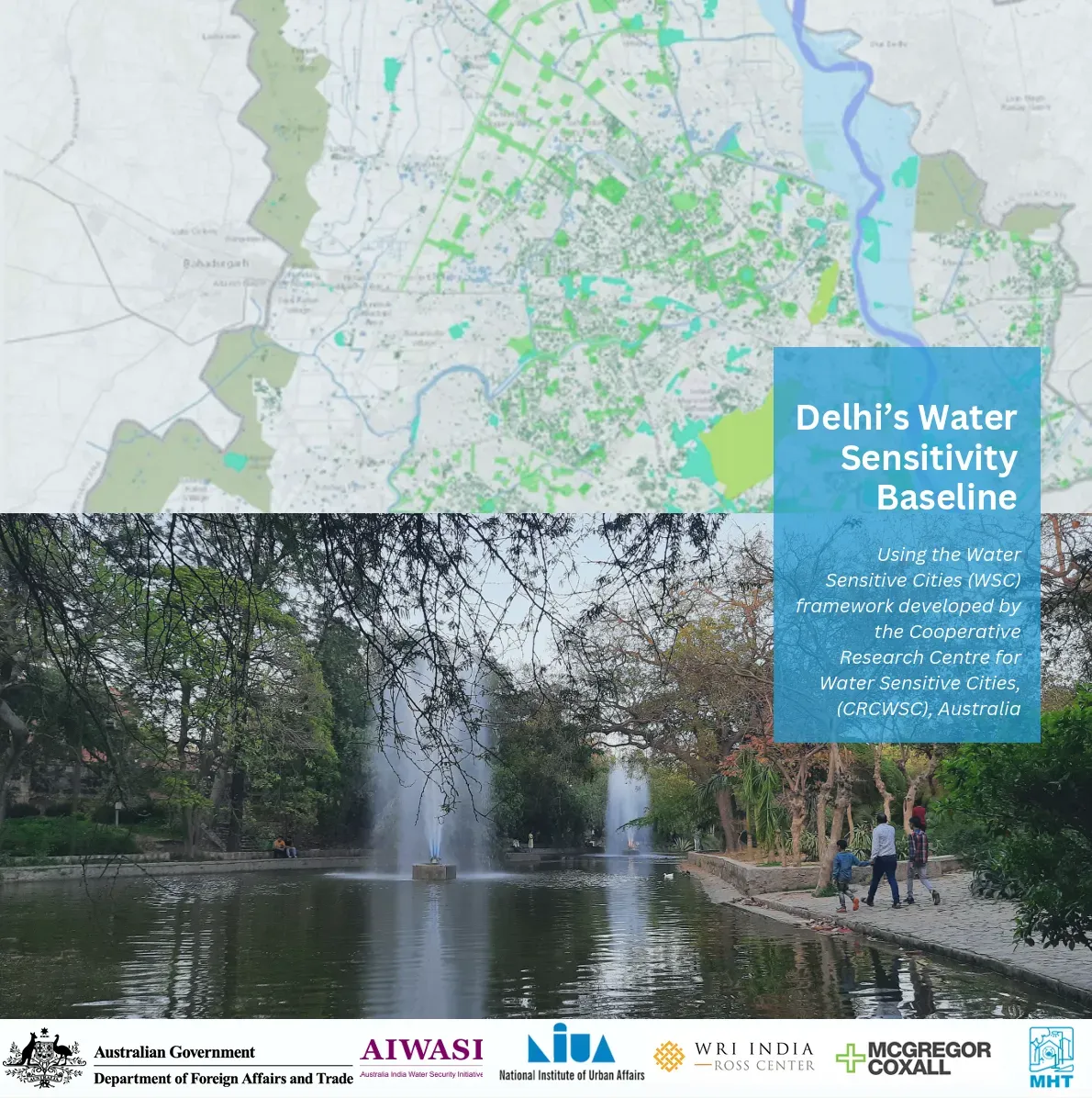
Delhi is confronted with escalating and interconnected water challenges that demand urgent, structured attention. The city faces a daily water supply deficit of 260 MGD against a total demand of 1,250 MGD, with groundwater extraction persisting at unsustainable levels of 126 MGD. Its drainage infrastructure — comprising over 4,000 drains — has become severely fragmented, with only 700 distinctly identifiable, and 19 major natural drains documented in the 1976 Drainage Master Plan no longer in existence. Urban water bodies have recorded a 7% reduction in area between 1999 and 2012, and the Yamuna River, though entering Delhi in a relatively unimpaired condition, exits as one of the most pollu…
 Publication
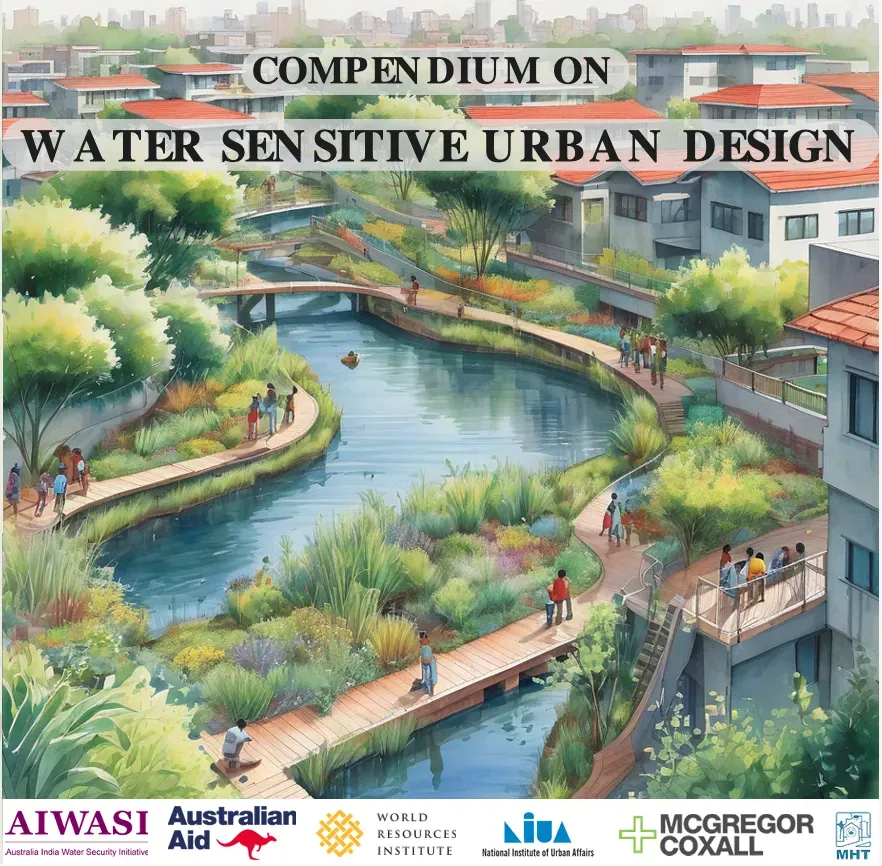
AIWASI Compendium on Water Sensitive Urban Design
2024
Indian cities are at a critical crossroads. With over 90% grappling with waterlogging and floods, 70% of water resources contaminated, and nearly three-quarters of urban water bodies lost in just four decades, the need for a new approach to urban water management has never been more urgent. Water Sensitive Urban Design (WSUD) offers a transformative pathway — one that moves cities beyond basic service provision toward adaptive, climate-resilient environments that serve both communities and ecosystems.This Compendium brings together 50 water-sensitive initiatives — 14 from Indian cities and 36 from across the world — organised across five thematic areas: Lakes and Waterbodies Rejuvenation, River Related Initiatives, Parks and Public Spaces, Community-centric Interventions, and Planning Interventions. Each case study is examined through the lens of the Water Sensitive Cities (WSC) goals developed by the Cooperative Research Centre for Water Sensitive Cities (CRCWSC), Australia, illustrating how WSUD principles translate into real, scalable action.Developed as a technical reference for Indian urban practitioners, this document is designed to help urban planners, policymakers, and stakeholders understand, mainstream, and implement WSUD approaches across diverse urban contexts. It maps co-benefits, SDG alignment, and WSC goal linkages, while highlighting existing Indian policy frame…