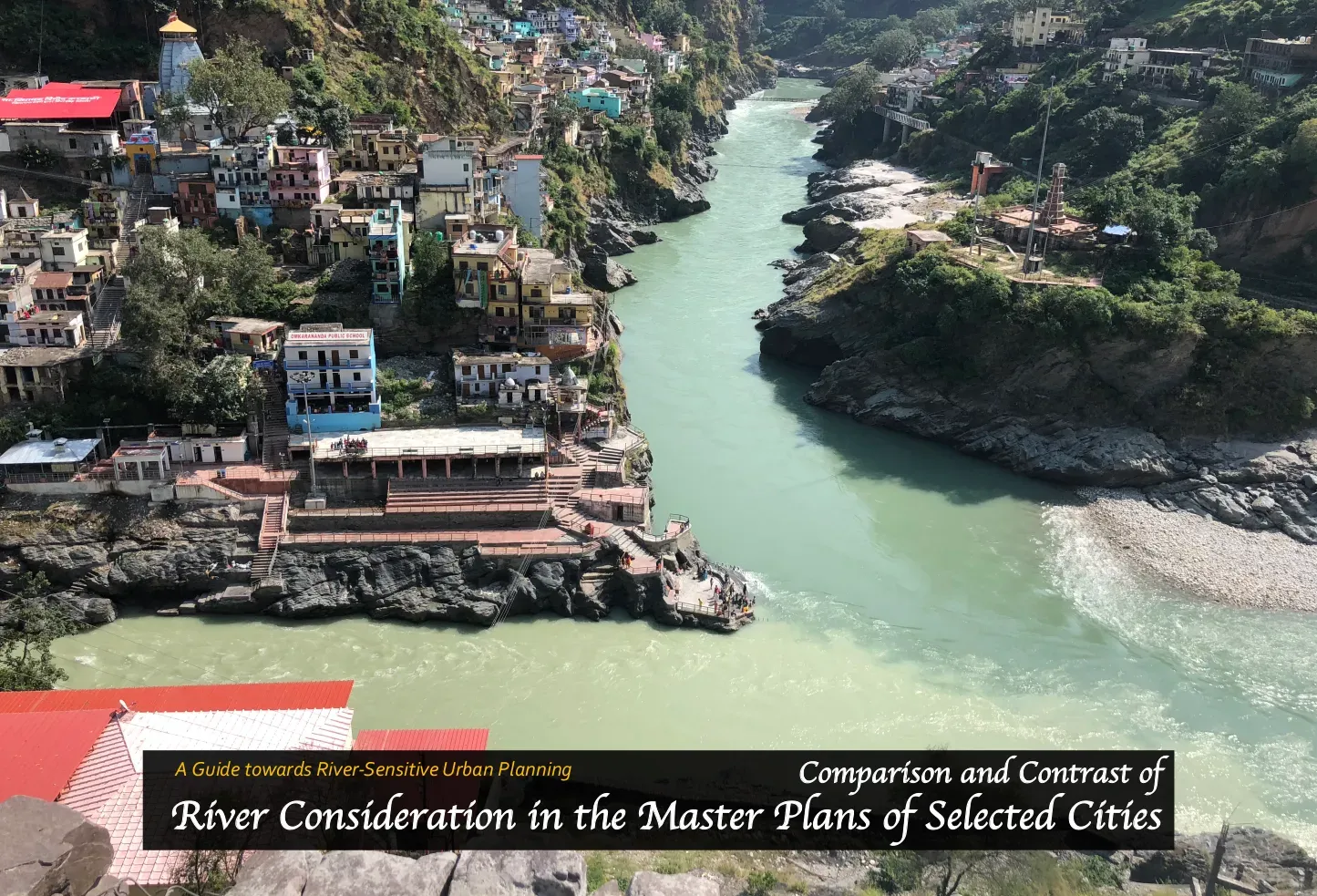
A Guide towards River-Sensitive Urban Planning
2020
The "River Sensitive Urban Planning: Knowledge Product" (Version 2), developed by the National Institute of Urban Affairs (NIUA) in collaboration with the National Mission for Clean Ganga (NMCG), provides a comprehensive framework for incorporating river-sensitive approaches into urban planning and development. This knowledge product is a vital resource designed to guide urban planners, policymakers, and stakeholders in cities across India, where river corridors are integral to both the ecological and cultural landscape.
The document highlights the critical need to integrate river health into urban planning, particularly as cities face rapid growth and urbanization. It emphasizes that rivers are not merely sources of water but essential ecological systems that support biodiversity, regulate climate, and provide important cultural and recreational spaces. By focusing on sustainable urban development, the knowledge product calls for a paradigm shift in how cities engage with their rivers, ensuring that urban growth aligns with environmental sustainability and resilience.
The knowledge product offers several strategies to achieve this goal. These include pollution management, decentralized wastewater treatment systems, sustainable stormwater management, and restoration of natural riverbanks. It outlines the importance of a river-sensitive approach to flood management, the preservation of riparian ecosystems, and the development of riverfronts that are both environmentally and socially inclusive. The plan advocates for integrating green infrastructure, such as wetlands and buffer zones, to maintain ecological balance and reduce the urban impact on rivers.
The document also focuses on the need for community participation in maintaining river health. It stresses that local communities must be actively involved in the planning and decision-making processes to foster a sense of ownership and responsibility towards river conservation. Moreover, it calls for collaborative governance, with roles for local authorities, urban planners, environmental experts, and civil society organizations, ensuring that all stakeholders are aligned in their efforts to safeguard river ecosystems.
Incorporating climate resilience and adaptive urban strategies into river-sensitive urban planning is another key aspect of the document. This knowledge product serves as an invaluable resource for cities seeking to balance development needs with river conservation and ensures that urban areas can thrive while safeguarding their natural water resources.