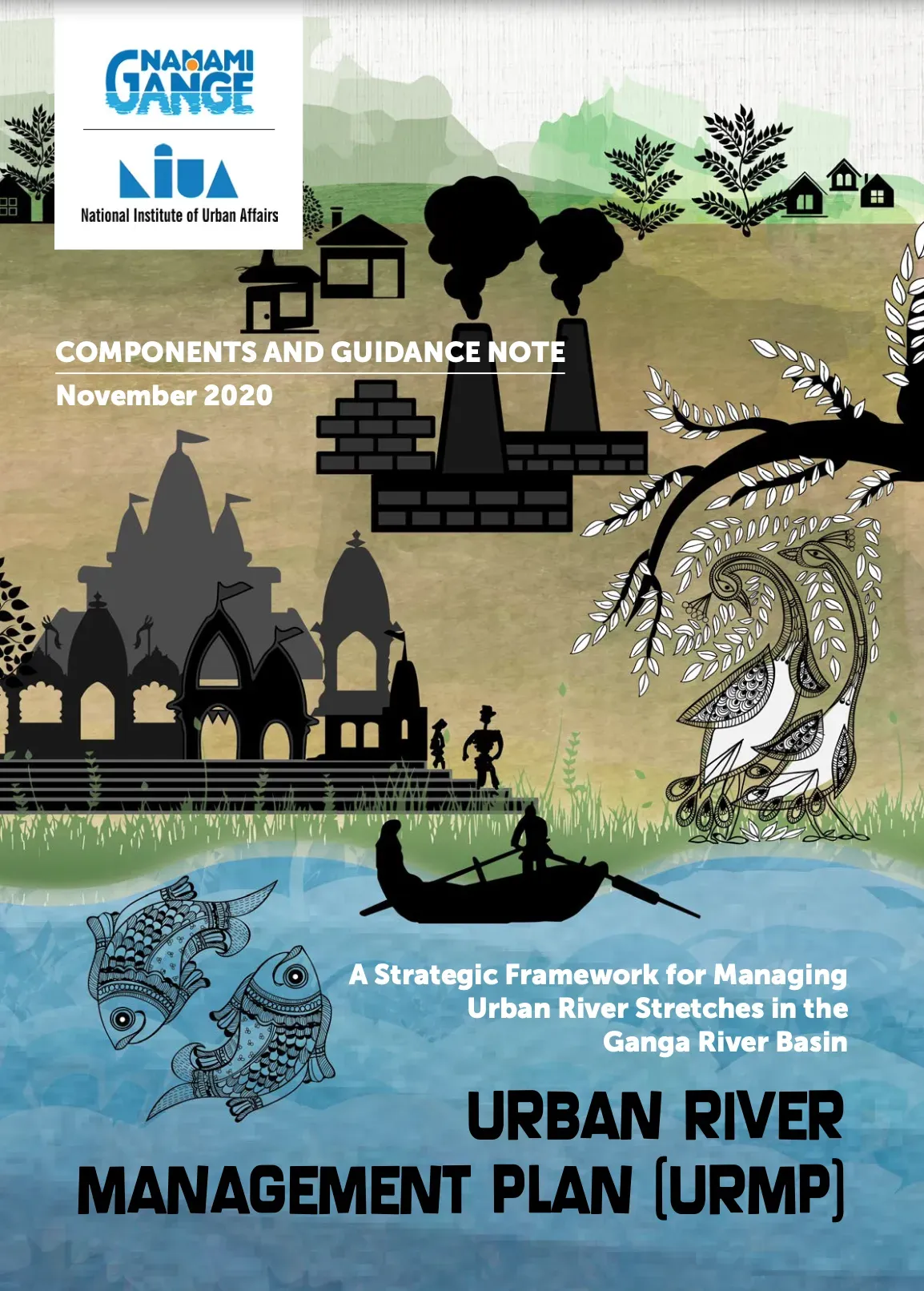
A Strategic Framework for Managing Urban River Stretches in the Ganga River Basin: URMP (PDF)
12.41 MB
Download
A Strategic Framework for Managing Urban River Stretches in the Ganga River Basin: URMP
2020
The Urban River Management Plan (URMP) Framework is a comprehensive guide developed by the National Institute of Urban Affairs (NIUA) with support from the National Mission for Clean Ganga (NMCG). It aims to provide cities with a structured approach for the sustainable management and rejuvenation of urban rivers, which have often been neglected or exploited due to rapid urbanization. The framework recognizes rivers not only as water bodies but also as critical ecological, cultural, and economic assets. As urban areas expand, the framework emphasizes the need to protect rivers through effective governance, planning, and coordination across urban sectors.
The URMP framework follows a seven-stage process. The first step involves a city-river profiling that helps in understanding the current condition of the river, its ecological status, and the socio-economic dependence of the surrounding urban population. The second stage involves developing a vision for the river's future and setting long-term and short-term goals. The third stage focuses on preparing actionable strategies, including identification of projects for river rejuvenation and flood management. The next stage includes alignment with city development plans, ensuring that river management becomes part of the urban development process. The framework also emphasizes institutional integration to ensure that various urban departments and stakeholders are involved in the implementation of the plan. The final stage involves developing a monitoring and evaluation mechanism to assess the progress of river management initiatives and ensure long-term sustainability.
A key element of the framework is its focus on nature-based solutions and climate resilience, which aim to restore the ecological health of the river systems while also addressing urban vulnerabilities such as flooding and water scarcity. The URMP also promotes multi-stakeholder engagement, bringing together local communities, municipal authorities, and national agencies to work towards a shared vision for river management.
The framework aligns with existing national programs like AMRUT, Swachh Bharat Mission, and Smart Cities Mission to ensure synergy and effective implementation. Additionally, it provides tools, templates, and performance indicators that cities can use to customize their river management plans.
Overall, the URMP aims to create river-sensitive cities by restoring ecological integrity and improving the overall quality of life for urban residents.