Urban River Management Plan – Ayodhya
2023
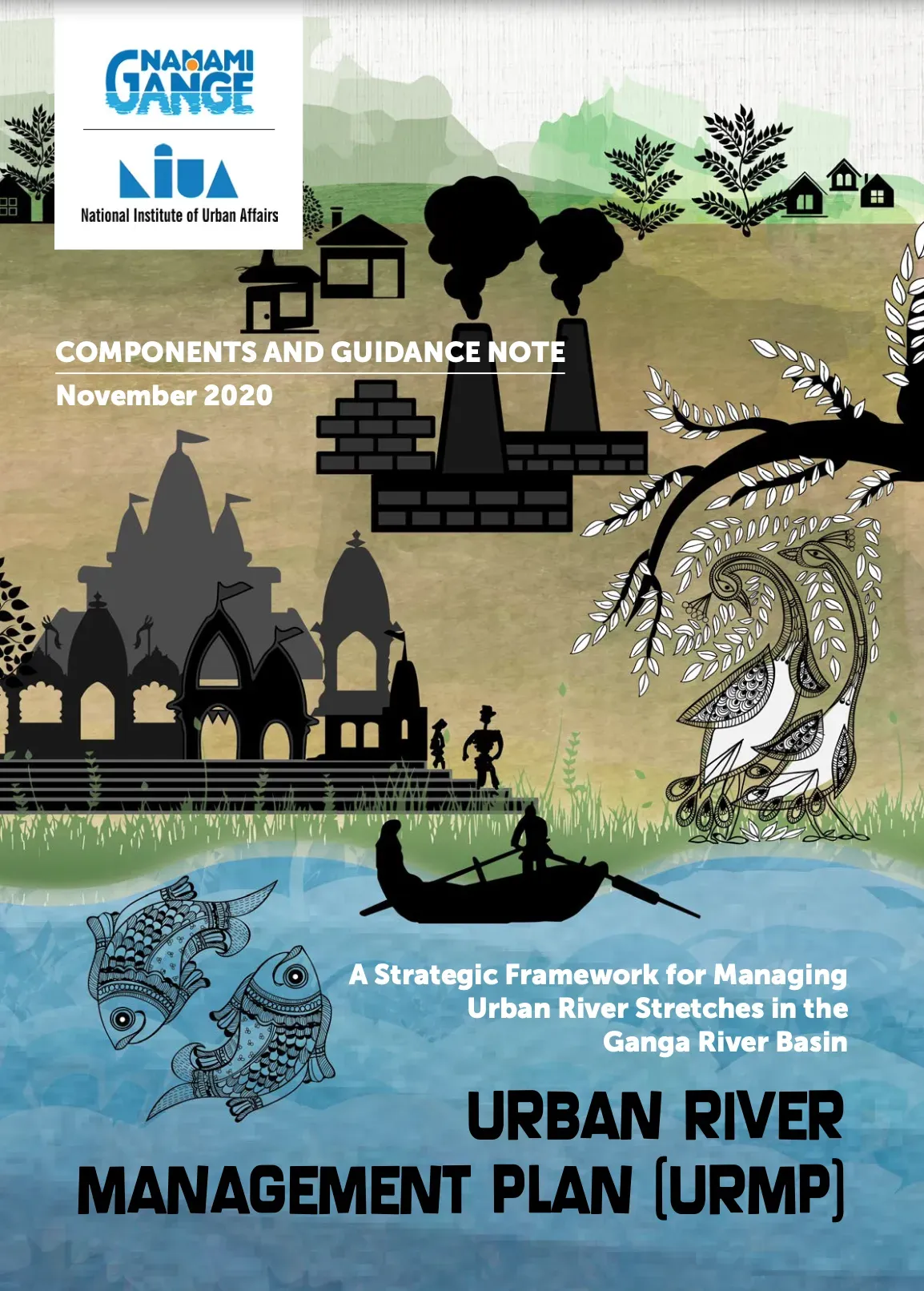
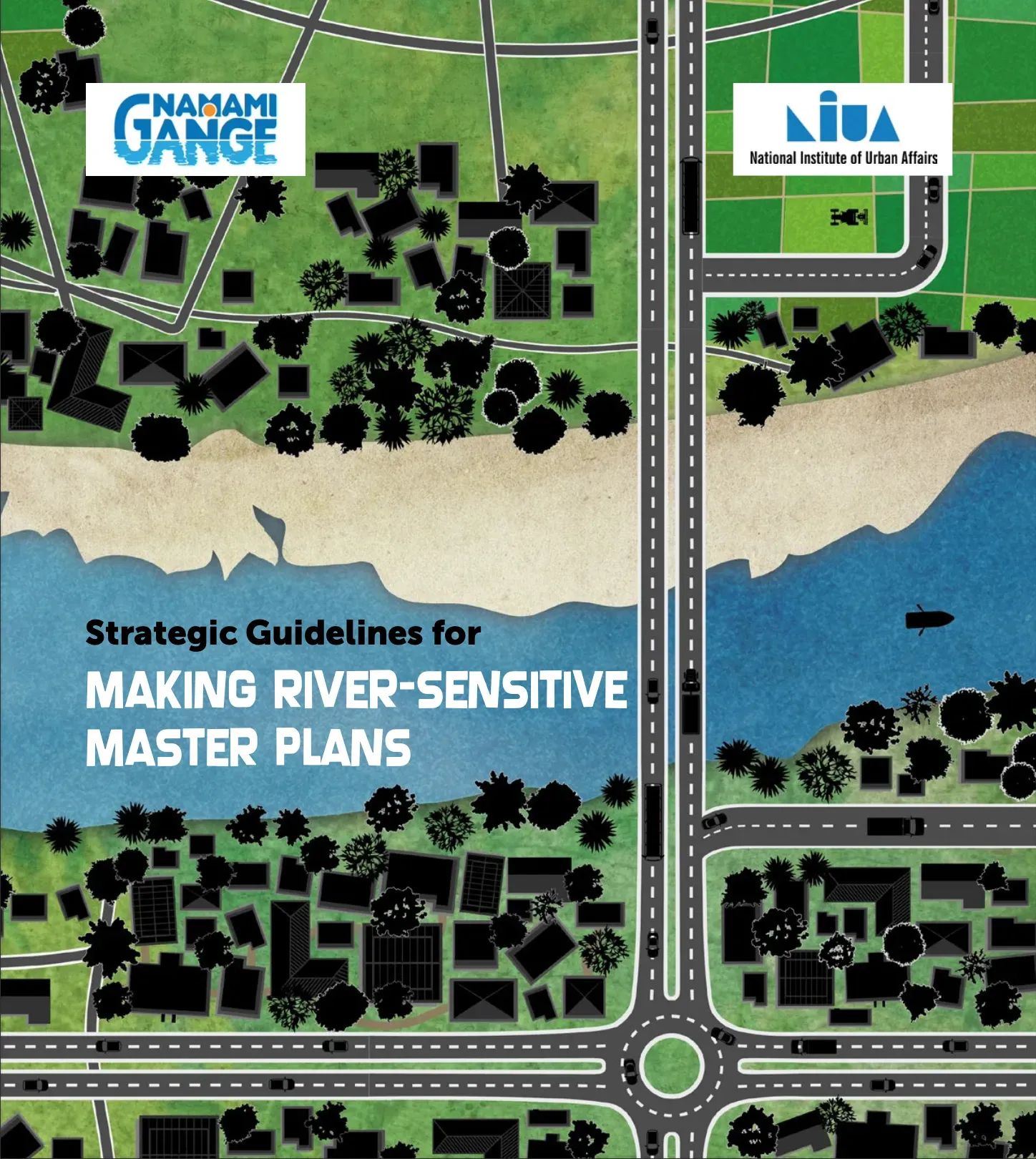
The Urban River Management Plan (URMP) for Ayodhya, jointly developed by the National Institute of Urban Affairs (NIUA) and the National Mission for Clean Ganga (NMCG), is a comprehensive framework aimed at restoring and preserving the ecological, cultural, and social value of the Saryu River. As Ayodhya undergoes rapid urban development, especially in the context of growing tourism and religious importance, the URMP serves as a roadmap to ensure that the city’s growth remains environmentally sustainable and river-sensitive.
The plan identifies key challenges facing the Saryu River, including untreated sewage discharge, unregulated construction along the riverbanks, solid waste accumulation, and loss of natural buffers and biodiversity. To address these, the URMP outlines ten interlinked objectives ranging from pollution abatement and ecological restoration to riverfront development and enhanced public engagement.
Key interventions proposed under the URMP include the creation of decentralized wastewater treatment systems to manage sewage more efficiently, strengthening the solid waste management framework to prevent waste dumping near the river, and restoring riparian vegetation to improve biodiversity and reduce erosion. The development of inclusive riverfronts that support both recreational use and cultural activities is another focus area, aiming to reconnect citizens with the river through safe, accessible public spaces.
Importantly, the URMP highlights the need for institutional coordination and local capacity building. It proposes structured governance mechanisms involving the Ayodhya Municipal Corporation, development authorities, pollution control boards, and citizen groups. Public participation and community stewardship are core principles, promoted through awareness campaigns and educational programs.
The plan is implemented in phases—starting with baseline assessments and diagnostics, followed by detailed planning, stakeholder consultations, execution, and continuous monitoring. It integrates principles of climate resilience, heritage conservation, and sustainable land use.
By aligning with national programs like the Namami Gange Mission, the URMP for Ayodhya not only focuses on river health but also offers a model for other heritage cities seeking to harmonize development with ecological preservation. It envisions a future where the Saryu River continues to thrive as the spiritual and environmental heart of the city.