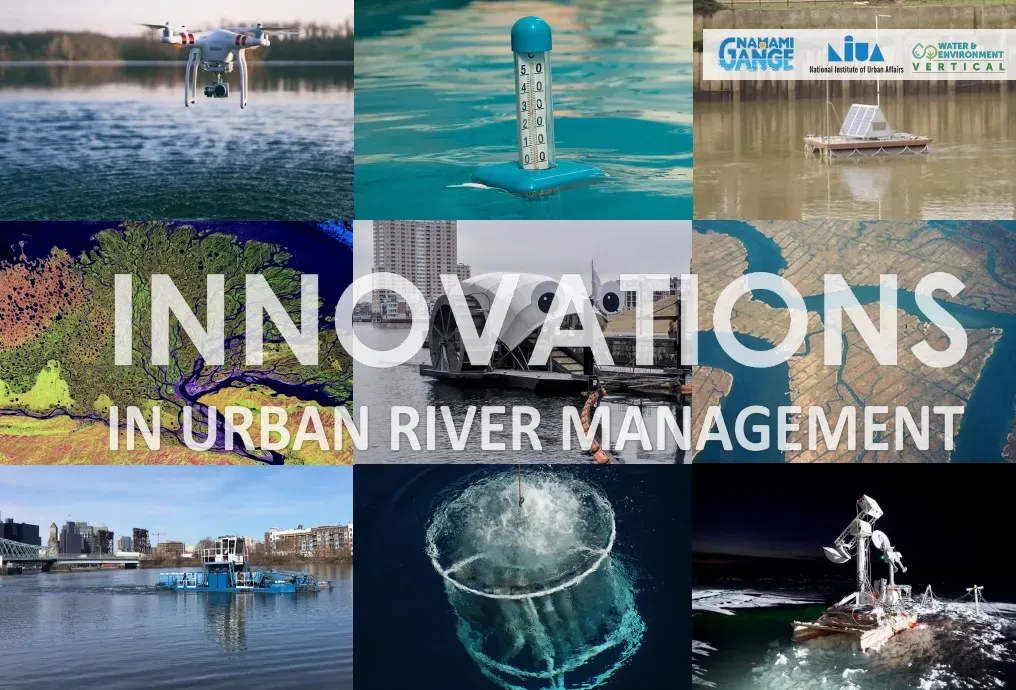
Innovations in Urban River Management
2022
Rivers are an essential part of urban ecosystems, offering not only ecological services but also playing a critical role in sustaining biodiversity, regulating microclimates, and supporting social and economic life. However, urban rivers today are under significant threat due to unchecked urbanization, inadequate infrastructure, poor community participation, and behavioral apathy. These pressures manifest in reduced water flow, increased pollution, rampant encroachments, and a drastic loss of flora and fauna. Such degradation severely hampers the river’s ability to provide its ecological functions and undermines the quality of life in cities.
Traditional river management practices, while valuable, are proving increasingly insufficient to address the scale and complexity of challenges posed by rapid urban growth. The need for adaptive, scalable, and cost-effective approaches has never been more pressing. Recognizing this, cities are beginning to explore and implement innovative solutions in urban river management that leverage technological advancements and participatory governance.
The knowledge product developed jointly by the National Institute of Urban Affairs (NIUA) and the National Mission for Clean Ganga (NMCG) presents a curated collection of such innovations. Drawing from global examples, it highlights how fields like Information Technology, Robotics, Artificial Intelligence, and Geographic Information Systems (GIS) are being used to address key urban river management issues. These innovations are categorized under five core thematic areas: Monitoring & Measurement, Pollution Abatement, Protecting Aquatic Ecosystems, Community Engagement, and Governance Systems.
Each case study within this compendium is detailed using a structured format—introducing the innovation, the problem it addresses, its geographical application, stage of implementation, technical details, potential applicability, limitations, and sources of reference. The aim is to equip city administrators, planners, and practitioners with practical knowledge and fresh ideas that can be contextualized and replicated to meet local needs. By showcasing these innovative interventions, the document aspires to foster an environment where cities can become more resilient, water-sensitive, and ecologically sustainable through informed and innovative urban river governance.