


Urban River Management Plan (URMP) for Delhi
Resource Partners: National Mission for Clean Ganga (NMCG)
Partners: Delhi Jal Board , Irrigation and Flood Control Department , Delhi Development Authority , Department of Environment, Government of NCT of Delhi , Municipal Corporation of Delhi
Duration: July 2025 - August 2026

About
Delhi’s rapid urbanisation, increasing population pressures, fragmented institutional responsibilities, and growing stress on the Yamuna River and its floodplains highlight the need for an integrated and city-specific approach to river management. While multiple agencies are involved in water supply, wastewater management, flood control, pollution regulation, and urban planning, existing interventions have largely remained sectoral, limiting coordinated action for river restoration. Recognising this need, the National Institute of Urban Affairs (NIUA), in partnership with the National Mission for Clean Ganga (NMCG), is developing an Urban River Management Plan (URMP) for Delhi. The URMP aims to establish an integrated planning and governance framework that aligns river restoration with urban development, climate resilience, and sustainable infrastructure planning.
Adopting a basin-to-city perspective, the URMP will assess the current status of the Yamuna river system within Delhi, including its drainage networks, floodplains, and pollution sources. The plan will identify key challenges related to water quality, flooding, ecological degradation, and institutional coordination, and propose technically feasible and financially viable interventions across short, medium, and long-term horizons. Through multi-stakeholder engagement and integration with ongoing national and city-level initiatives, the URMP seeks to institutionalise river-sensitive urban planning, improve the ecological health of the Yamuna, reduce flood and pollution risks, and strengthen the long-term resilience of the river corridor within Delhi’s urban landscape.
52 km
of the Yamuna flows through Delhi's administrative boundary
131
bird species have been recorded across the Yamuna floodplains
1,040+
water bodies in Delhi are linked to the river ecosystem
Centre for River-Sensitive Cities
Resource Partners: National Mission for Clean Ganga (NMCG)
Duration: December 2021 - December 2024
About
The Centre for River-Sensitive Cities drives the agenda for river-sensitive urban development in India. It leads and expands the narrative around urban river planning and management, with a focus on enabling practical, on-the-ground transformation in cities. The Centre works to create an environment that supports implementing practices, regulations, and projects that harmonise the city-river relationship.
Its work is organised around three core areas:
Managing the River Cities Alliance (RCA): The Centre supports the day-to-day functioning of the 30-member River Cities Alliance and works to strengthen its capacity towards self-governance.
Decision Support Systems for Urban River Management: The Centre develops a range of decision support tools and frameworks addressing diverse aspects of urban river planning and management.
Advocacy and Capacity Building: The Centre sensitises cities to the value of integrating river considerations into their development agenda. This includes training cities in the application of frameworks, toolkits, and best practices developed for urban river management, as well as promoting river-related subject areas within academic curricula to shape the next generation of urban practitioners.
730
Stakeholders sensitised/trained
30
Cities actively engaged with
4
Dedicated urban river management plans developed
Addressing the Urban Drivers of River Health in the Ganga River Basin (URVERS)
Resource Partners: National Mission for Clean Ganga (NMCG)
Duration: March 2019 - October 2021
About
Much of the undesirable state of rivers in the country is because of detrimental activities in cities. While cities have been the main cause of the problem, they need to be part of the solution as well. This project was conceptualised on this premise. The overall objective of the project was to promote river-sensitive urban development in cities of the Ganga Basin. It sought to do so by taking a three-pronged approach. The first was to develop national-level frameworks and advisories for managing the different aspects of urban rivers. The second was to implement pilot projects to demonstrate the application of urban river management interventions. The third was to build the capacities of city officials on different aspects of managing urban rivers.
Key Highlights
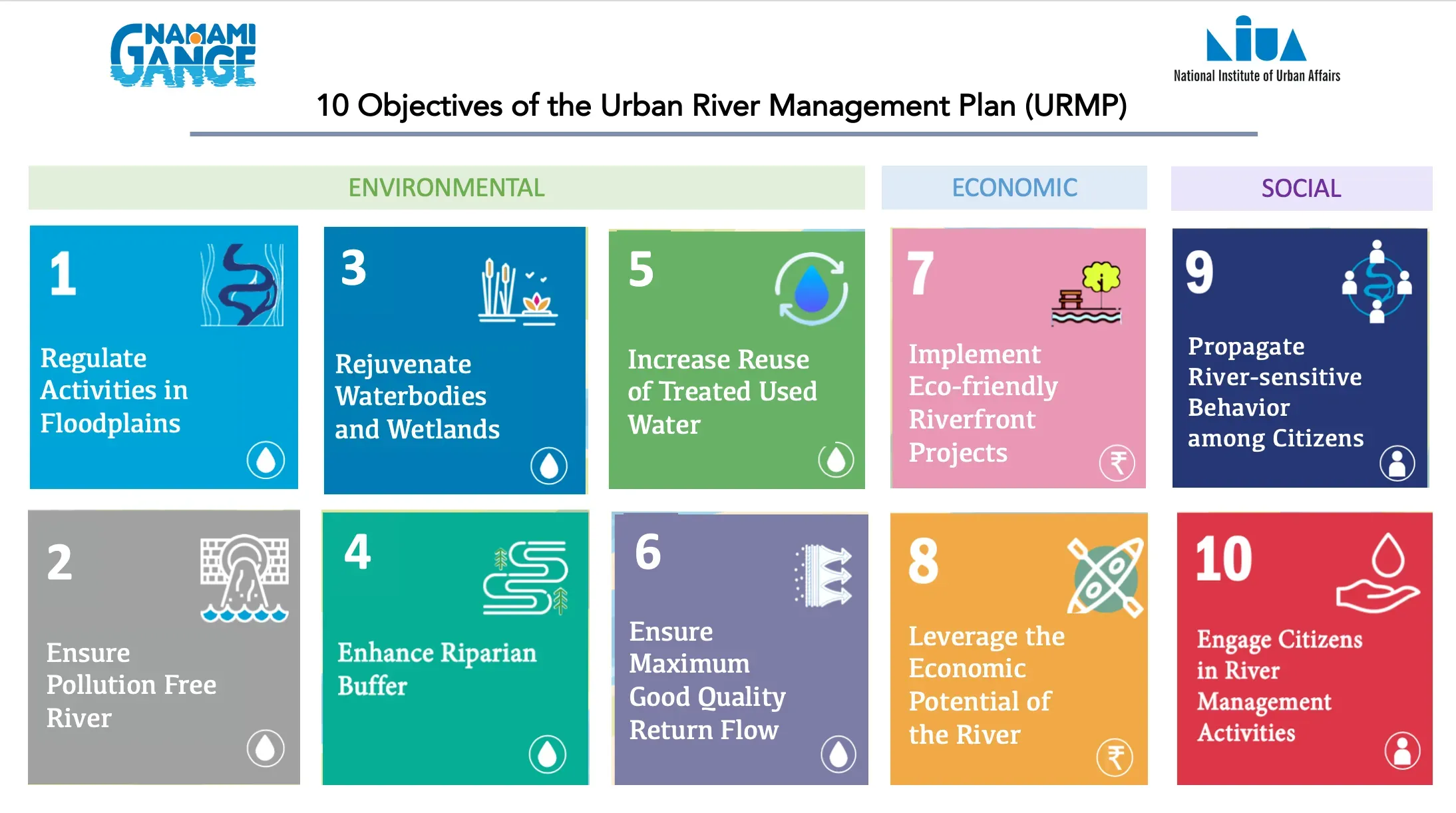
1. Developed a national framework for managing urban rivers called the “Urban River Management Plan (URMP) framework”
The framework is a general template for river cities to prepare their city-specific river management plans. It was launched on 04 November 2020 by the Hon’ble Minister of Jal Shakti. It comprises a 10-point agenda that cities need to act on.
The URMP framework goes beyond mere pollution control to include aspects related to the river economy and to connect citizens with the river. The actions that cities take to implement the URMP framework's 10-point agenda include tangible projects, regulatory measures, planning interventions, and citizen engagement programmes.
2. Established the River Cities Alliance
NMCG and NIUA established the RCA with a vision for long-term conservation and rejuvenation of urban rivers. RCA provides a platform for river cities in India to gain, share, and exchange knowledge on implementing various aspects of managing urban rivers in relation to the URMP framework. It was launched on 25 November 2021 by the Hon’ble Minister for Jal Shakti.
In addition to serving as a knowledge exchange platform, RCA also provides NMCG and NIUA with a unique cohort of cities to mentor and handhold so that they can serve as model cities for urban river management. RCA started with 30 cities but has now expanded to 145 cities.
NIUA serves as the Secretariat for RCA and organises five categories of activities for the RCA members: Capacity building of member cities; networking events for exchange of knowledge among member cities; demand-driven technical support for member cities; expanding the knowledge base on different aspects of urban river management; and documenting and disseminating good practices of member cities within the network and beyond.
3. Developed national guidelines for making river-sensitive master plans
Restoring riverine ecosystems in urban contexts is a multi-sectoral, multi-disciplinary, and multi-stakeholder endeavour. Far too often, cities have a reactive approach to restoration, acting when the problem is already at hand. However, to achieve comprehensive restoration, a proactive approach is needed, one that develops transformational solutions that challenge business-as-usual.
An ideal avenue for germinating such transformational solutions in the urban context is within a city’s broader development plan. The role of urban planning has long been widely acknowledged as a panacea for some of the most pressing challenges; hence, it would be apt to imagine that river-sensitive urban planning is key to reconciling the estranged relationship between rivers and cities.
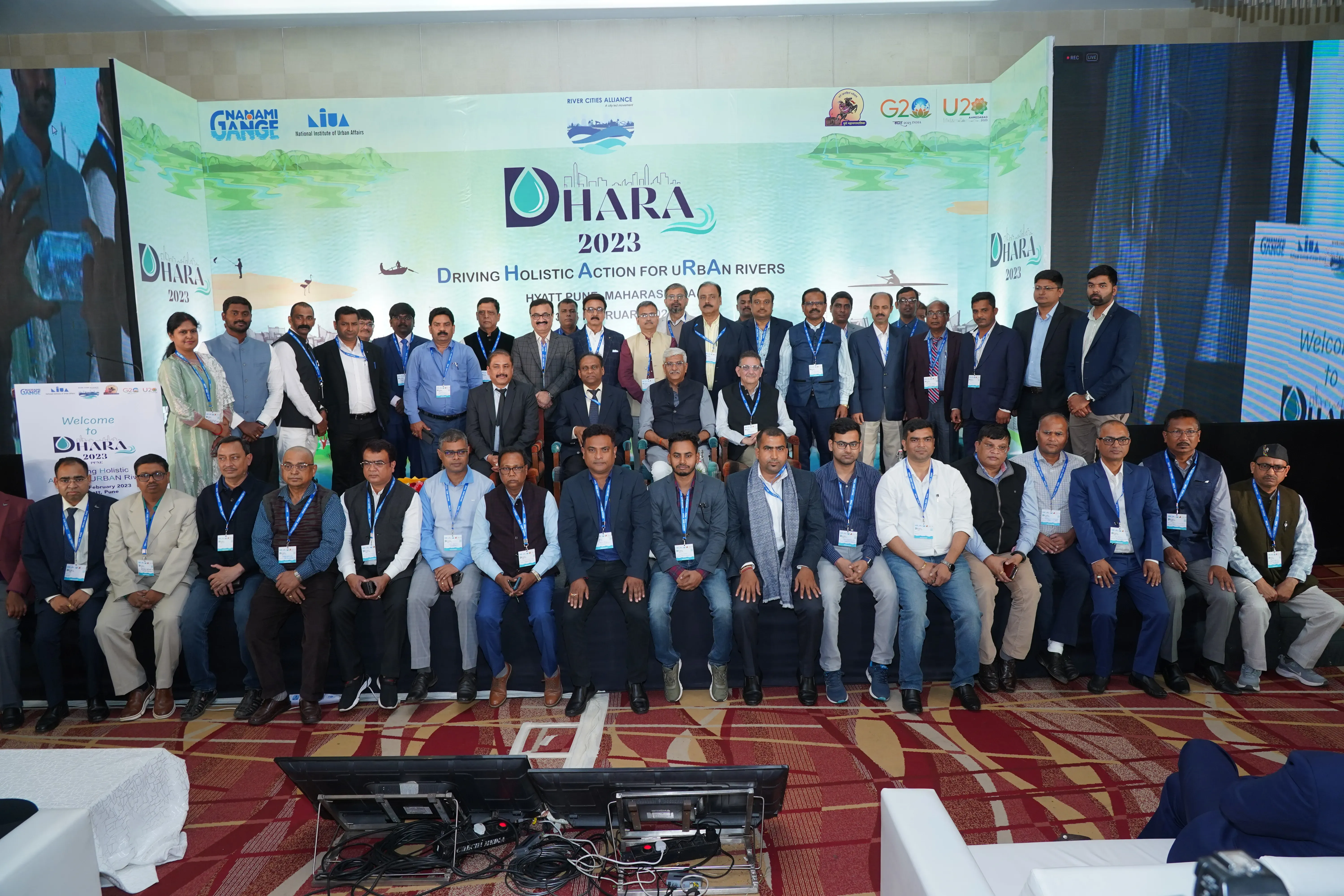
This document was developed to address this particular need. It focuses on strengthening the symbiotic relationship between rivers and cities through ecologically responsible urban development trajectories.
370+
city officials trained
25+
university student theses sponsored under the first two seasons of the Student Thesis Competition
30
river cities onboarded to the River Cities Alliance during its launch
Preparation of Urban River Management Plans for 60 cities in the Ganga River Basin
Resource Partners: National Mission for Clean Ganga (NMCG) , World Bank
Partners: LEA Associates South Asia Private Limited (LASA)
Duration: September 2023 - September 2025
About
On 10 December 2019, during the National Ganga Council Meeting in Kanpur, the Hon’ble Prime Minister emphasised the need to adopt new thinking in river cities, one with a facilitatory outlook rather than a regulatory approach. In the 5th meeting of the Empowered Task Force on River Ganga in February 2020, NIUA and the Town and Country Planning Organisation (TCPO) were directed to provide suggestions on holistic river-centric planning. Accordingly, the Urban River Management Plan (URMP) framework was conceived of and launched on 4th November 2020 by NIUA in partnership with the National Mission for Clean Ganga (NMCG). The framework is a general template for river cities to develop city-specific river management plans that take into account the ecological and socio-economic significance of rivers. URMPs have since been formulated by Kanpur, Ayodhya, Chatrapati Sambhaji Nagar, Bareilly, and Moradabad.
With support from the World Bank, 60 additional cities within the Ganga Basin states of Uttarakhand, Uttar Pradesh, West Bengal, Bihar, and Jharkhand will now prepare their URMPs. From the hill cities of Uttarakhand to the impact of rapid industrialisation on the rivers of Bihar and Jharkhand, this project will focus on a multitude of verticals - all aimed at strengthening urban river management in India. Over the duration of this project, it will focus on preparing the URMPs in partnership with the 60 identified Ganga Basin cities. In the first phase, 27 cities will be targeted, while the remaining 33 cities will be taken up in the subsequent phase.
Project Location
60
Cities in the Ganga Basin states of Uttarakhand, Uttar Pradesh, West Bengal, Bihar and Jharkhand are being covered under the project
3 million +
People will be directly impacted in the first phase alone, which implements the project in 25 chosen cities
18
Tributaries of the Ganga River will be impacted in the first phase of the project