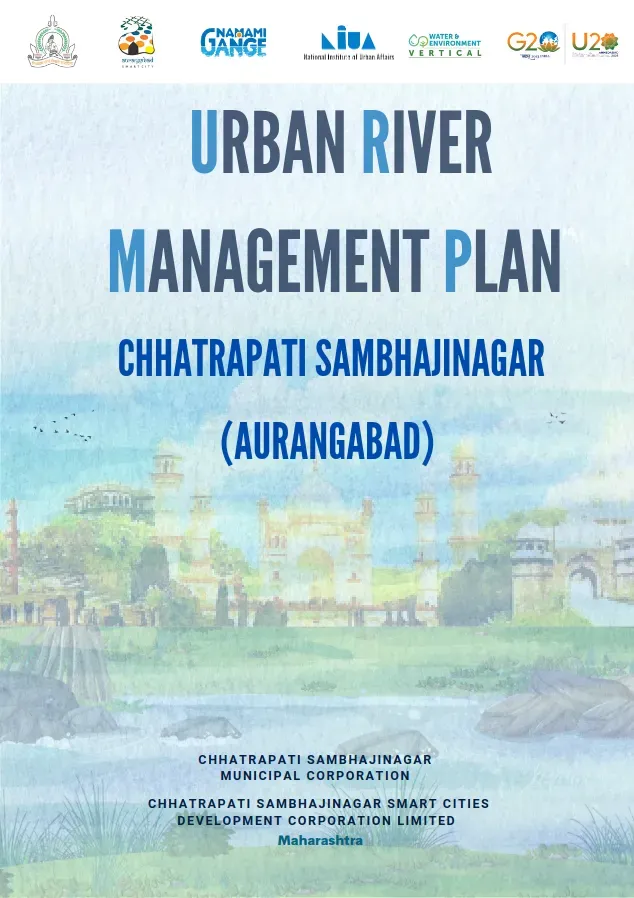
Urban River Management Plan - Chhatrapati Sambhajinagar (formerly Aurangabad) (PDF)
80.26 MB
Download
Urban River Management Plan - Chhatrapati Sambhajinagar (formerly Aurangabad)
2023
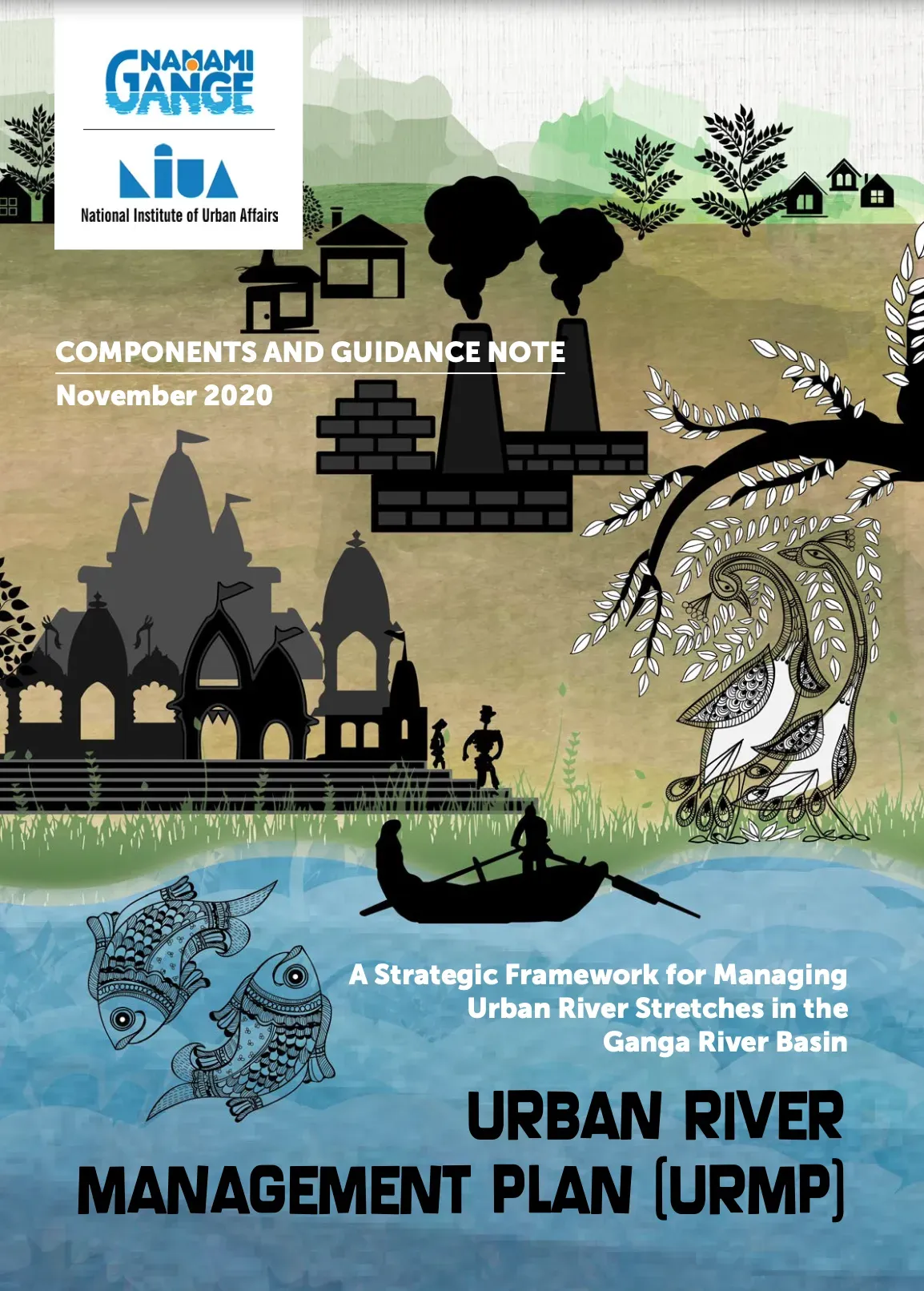
The Urban River Management Plan (URMP) for Chhatrapati Sambhajinagar, formerly known as Aurangabad, is a comprehensive and strategic planning document prepared by the National Institute of Urban Affairs (NIUA) in collaboration with the National Mission for Clean Ganga (NMCG) and the Chhatrapati Sambhajinagar Municipal Corporation. This plan focuses on the rejuvenation and sustainable management of the Kham and Sukhana rivers, which flow through the heart of the city and have long been central to its ecology, heritage, and urban development.
The URMP identifies a number of environmental and urban pressures affecting the rivers, including untreated sewage discharge, solid waste dumping, urban encroachment on floodplains, and degradation of natural ecosystems. The plan proposes a holistic approach structured around ten thematic objectives that integrate river health into the broader urban governance and planning framework. These objectives include pollution abatement, ecosystem restoration, riverfront development, solid and liquid waste management, risk reduction, and enhanced public access.
Key proposed interventions include the establishment of decentralized wastewater treatment systems, scientific management of solid waste to reduce river pollution, restoration of green buffers and riparian vegetation, and development of public spaces like ghats, walkways, and parks to promote community interaction with the river environment. These measures are supported by strong institutional mechanisms involving multiple stakeholders, including government departments, technical experts, and local communities.
A central focus of the URMP is on community engagement and education. Public awareness campaigns, stakeholder consultations, and participatory planning exercises are embedded into the process to foster local ownership and behavioral change. The plan also outlines a robust monitoring and evaluation system to ensure transparency, accountability, and adaptive management.
By aligning with broader national missions such as Namami Gange, AMRUT, and the Smart Cities Mission, the URMP for Chhatrapati Sambhajinagar serves as a replicable model for other Indian cities facing similar river degradation challenges. It envisions a city where rivers are not just passive recipients of waste but active, vibrant ecosystems that contribute to the city's livability, resilience, and identity.