Strategic Guidelines for Making River Sensitive Master Plans
2021
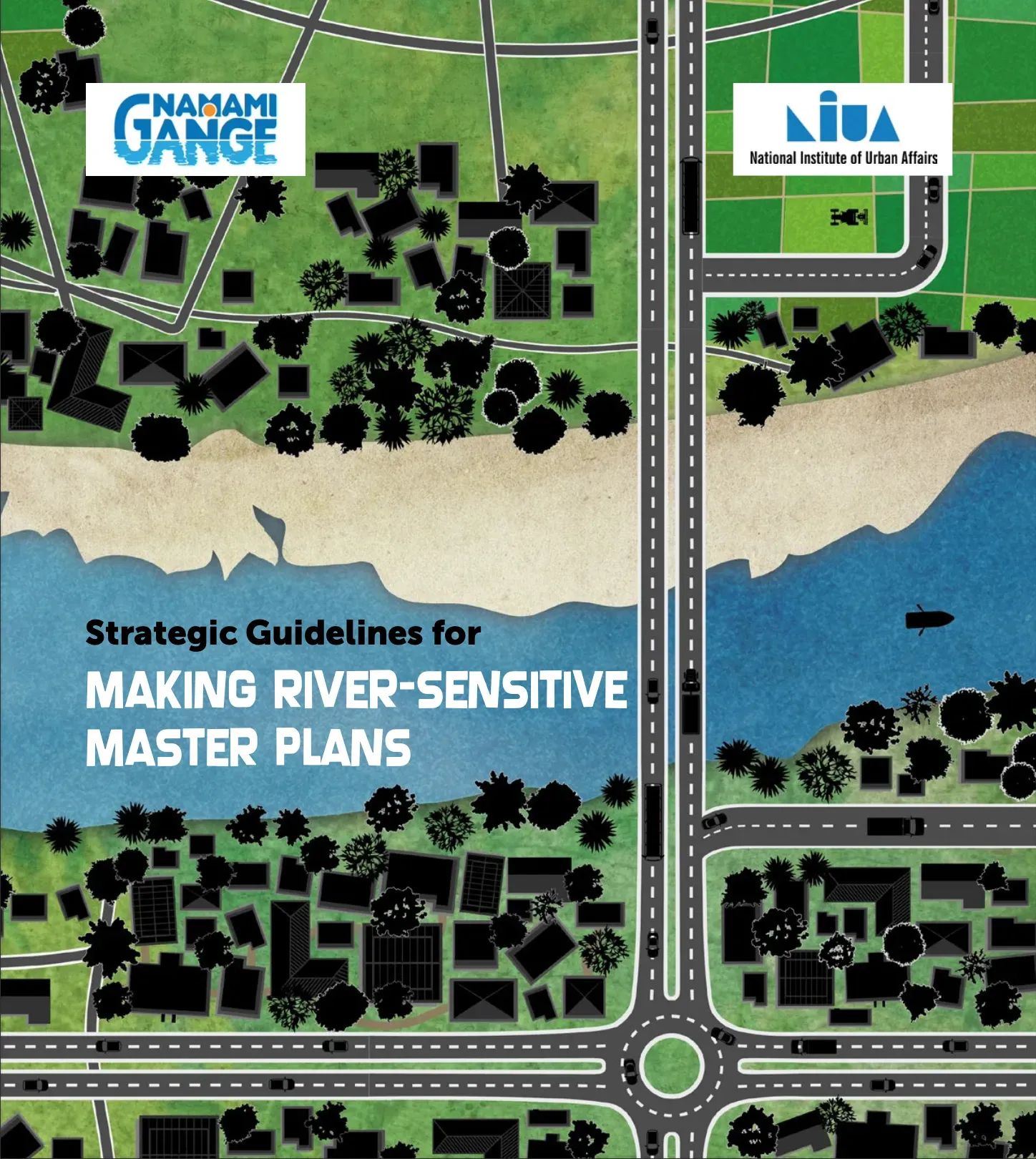
The Strategic Guidelines for Making River-Sensitive Master Plans, developed by the National Institute of Urban Affairs (NIUA) in collaboration with the National Mission for Clean Ganga (NMCG), provide a comprehensive framework to help cities across India incorporate river-sensitive approaches into their urban planning processes. The document underscores the importance of recognizing rivers not just as water bodies, but as vital ecological, cultural, and economic assets that are crucial to the sustainability of urban environments. With rapid urbanization often putting rivers at risk through pollution, encroachment, and poor management, these guidelines aim to embed river conservation into city development plans.
The guidelines outline a structured process that cities can follow to integrate rivers into their master planning. The first stage involves conducting a river baseline assessment, which includes understanding the river’s current ecological status, water quality, and the pressures it faces due to urbanization. This data helps form the foundation for the next stage, which involves visioning—setting a long-term, sustainable vision for how rivers can be integrated into urban life. Along with this, clear, actionable goals are set for the river’s management, health, and ecological restoration.
A crucial component of the guidelines is the integration of policies and regulations that align with river-sensitive principles. This ensures that urban planning processes actively contribute to the health of rivers, not just as a passive component of the landscape. Specific sectoral strategies for land use, water supply, sanitation, and flood management are tailored to address river concerns, ensuring that these elements of urban planning incorporate river restoration and preservation.
The guidelines also emphasize public participation throughout the planning process, engaging local communities, stakeholders, and citizens. This involvement fosters a sense of ownership and responsibility for river health, ensuring that the community plays a key role in implementation. Additionally, a robust monitoring and evaluation system is established to track progress and assess the effectiveness of river-sensitive interventions over time.
By embedding these principles into master planning, the guidelines aim to create river-sensitive cities that promote not only ecological sustainability but also social and economic resilience. The approach is aligned with national missions such as the Namami Gange Programme and the Smart Cities Mission, ensuring that river management is integrated into broader urban development goals. This strategic framework enables cities to manage their rivers effectively while promoting overall sustainable growth.