


Evaluating the Efficacy and Impact of the Drink From Tap Mission in Odisha
Resource Partners: Water Corporation of Odisha (WATCO) , Department of Housing and Urban Development (HUDD) , Government of Odisha
Partners: Sparsh Social Foundation (SSF)
Duration: August 2021 - February 2022

About
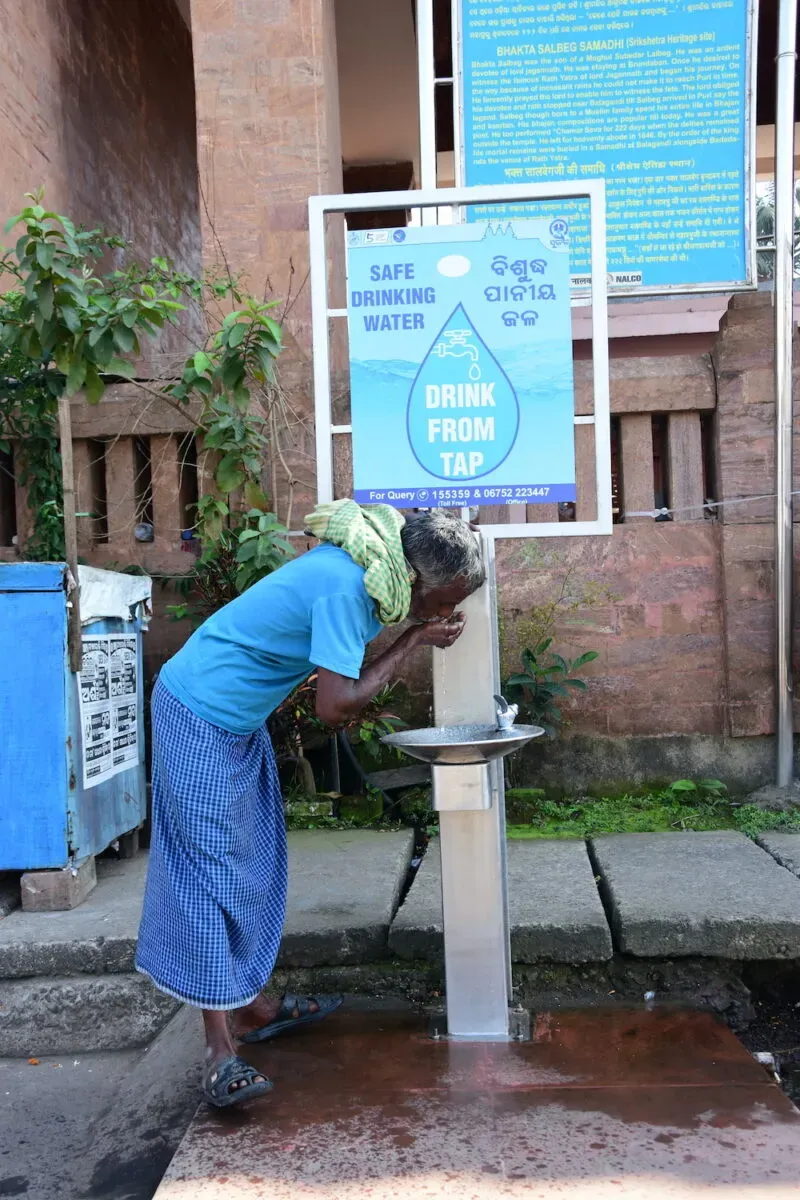
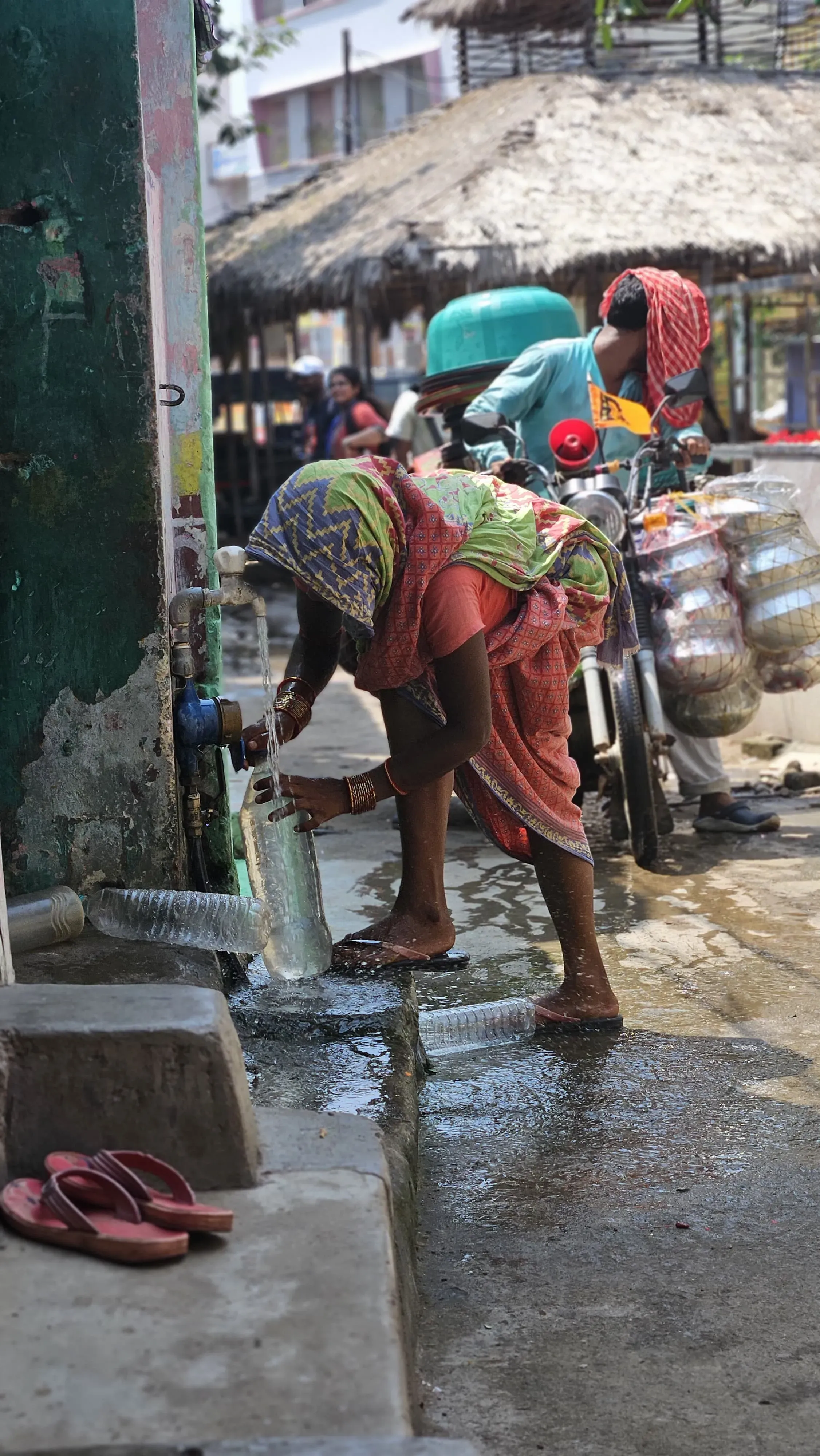
In August 2019, the Government of Odisha launched the seminal "Drink from Tap" Mission, revolutionizing urban water supply by ensuring 24/7 tap water that was safe to drink and use directly — eliminating the need for filtration or boiling.
To pave the way, Odisha rolled out pilot water supply schemes in select areas of Bhubaneswar and across the entire city of Puri. To assess their impact and sustainability, the National Institute of Urban Affairs (NIUA) was engaged to evaluate the efficacy and impact of the scheme.
This assessment focuses on:
- Technical efficiency – The performance of the system on service level benchmarks
- Consumer perception – Public trust and satisfaction with the initiative
- Institutional capacity – Readiness for long-term implementation
With a vision to expand the mission across all 114 Urban Local Bodies (ULBs) in Odisha, the insights offered by NIUA will be critical for refining strategies, overcoming challenges, and ensuring the mission's long-term success. The evaluation done serves as a valuable blueprint for cities embarking on 24x7 potable water supply schemes in the near future.
1600
Consumer perception surveys conducted in Bhubaneswar and Puri
27
District Metering Areas (DMAs) surveyed as part of the project
1000+
Slum households were involved in the evaluation study that was conducted by the team
Establishing a Standard Operating Procedure (SOP) for the Implementation of Drink from Tap (DFT) Schemes
Resource Partners: Water Corporation of Odisha (WATCO)
Partners: Water Corporation of Odisha (WATCO) , 24 Urban Local Bodies
Duration: February 2024 - Ongoing
About
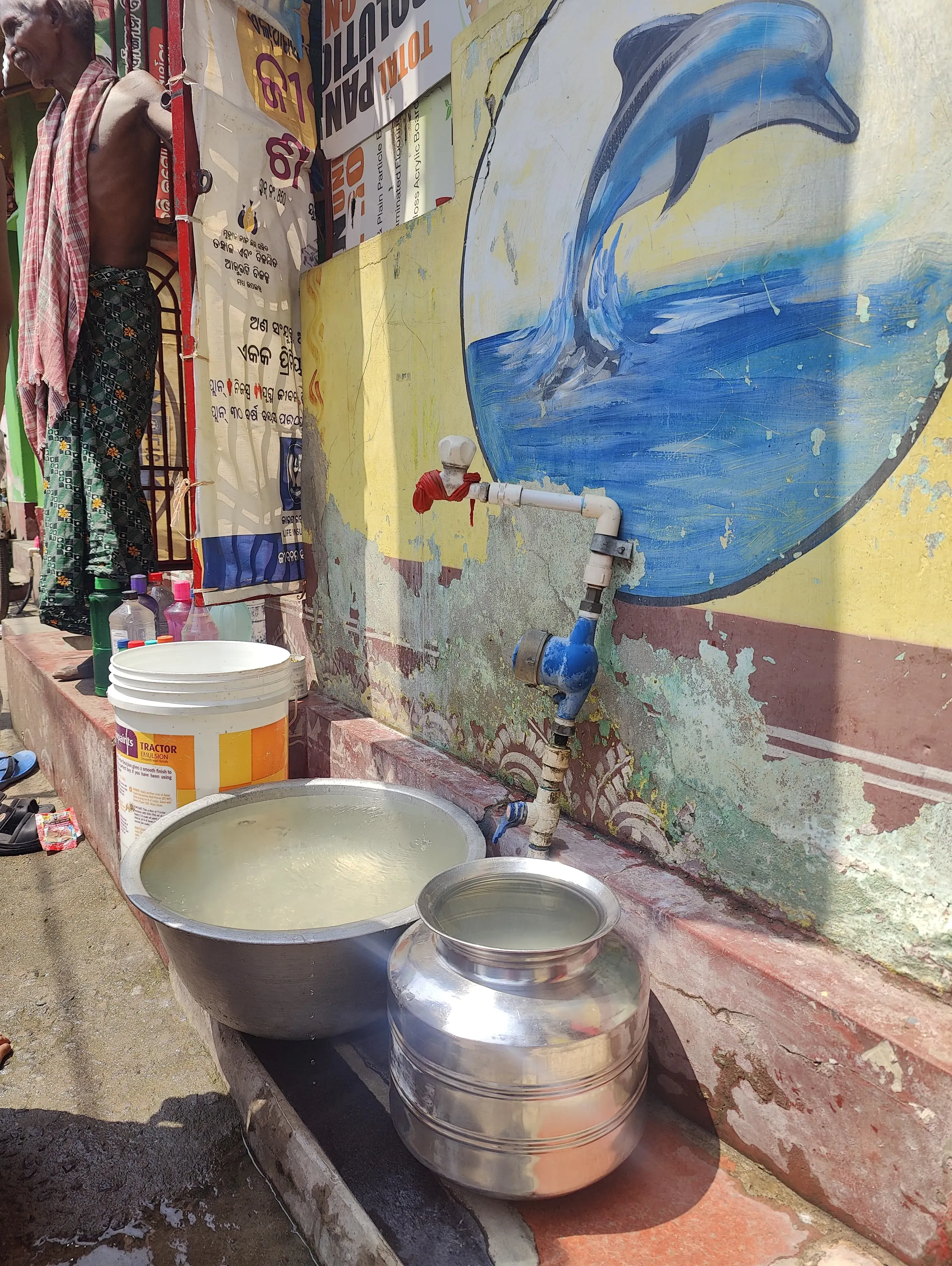
The ‘Drink from Tap’ (DFT) Mission is a flagship initiative of the Government of Odisha, aimed at ensuring safe, high-quality, 24x7 drinking water supply to urban residents across the state. Successfully implemented in 24 Urban Local Bodies (ULBs), the mission is now being scaled up to cover all 114 ULBs in Odisha. To facilitate smooth and timely implementation at this scale, a comprehensive Standard Operating Procedure (SOP) is being developed.
The SOP draws on lessons learned from the initial implementation and is designed to provide clear, actionable guidance for ULBs. It aims to eliminate delays caused by unclear directives, streamline monitoring and reporting, and support adherence to tight implementation timelines. Developed in close coordination with the Water Corporation of Odisha (WATCO), the SOP integrates on-ground experiences and challenges faced by ULBs.
The SOP will address five thematic areas: Technical (design period, SCADA, automation), Institutional (tendering, staffing, capacity building), Financial Management (tariffs, sustainability), Operations and Maintenance (water quality, audits, energy efficiency), and Policy Measures (NRW, climate resilience, awareness, consumer satisfaction).
To enhance accessibility and usability, the SOP is also being translated into a digital dashboard, which will serve as a dynamic platform for reference and implementation.
24
Urban Local Bodies contributed information that was collected and collated into systemic research findings
114
Urban Local Bodies in Odisha were targeted for the scale-up of the DFT Mission, supported by a Standard Operating Procedure (SOP) also applicable to ULBs across other Indian states
5
Thematic areas were used to consolidate detailed guidelines for effective implementation
Institutionalizing an Impact Assessment Framework for Drink from Tap Mission in Odisha
Resource Partners: Water Corporation of Odisha (WATCO)
Partners: Water Corporation of Odisha (WATCO) , ULBs , Ms Pratihari & Associates
Duration: February 2024 - February 2025
About
The Government of Odisha has been proactively enhancing water supply and sanitation in the state, by operationalizing schemes such as BASUDHA (Buxi Jagabandhu Assured Drinking Water to all Habitation). In August 2019, the state launched its “Drink from Tap” (DFT) Mission that aimed to provide 24X7 drink-from-tap quality water to every household in urban Odisha so that water accessed from household taps was safe to drink and cook with without additional filtration or boiling. In 2021, NIUA was engaged by the Water Corporation of Odisha (WATCO), Department of Housing and Urban Development to evaluate the efficacy of its ‘Drink from Tap’ mission. WATCO has since undertaken this work across 24 Urban Local Bodies (ULBs) in Odisha. NIUA’s role now is to institutionalize an impact assessment framework, using an indicator-based approach to evaluate system efficiency, operations, maintenance, and consumer satisfaction. These efforts include training WATCO officials, applying an easy-to-use impact assessment tool across 24 ULBs, and developing a baseline framework for non-DFT areas to measure the comparative impact and progress of future implementations. Unique features include a blend of qualitative and quantitative data collection methods, rigorous field visits, comparison with Service Level Benchmarks (SLBs), and the creation of a digital dashboard to support macro and micro-level analysis of DFT.
21
ULBs of Odisha are currently applying the Impact Assessment Tool developed under the project to understand the DFT impact.
1600+
household surveys across 21 cities have been conducted to understand the consumer’s perception of, and reaction to, Odisha’s DFT mission.
900
slum households were surveyed successfully.